And so it begins…

Hi,

We are a group of four students at Escola Superior de Educação – Instituto Politécnico do Porto. This website is one of the components of our final project for the subject of Matrizes Culturais Inglesas nos Media. We’ll be posting texts that we have produced, as well as some bonus stuff!

If you want to learn a little bit more about each of us individually, please proceed to the Who we are section of our website!

Behind the scenes: Video Project

“«I fear for my children in the age of social media,» says Gabby Logan”

by Soraia Carvalho

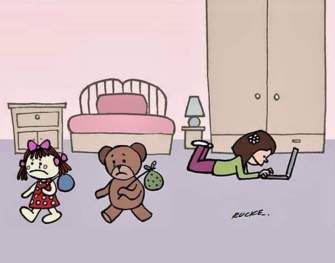
This article approaches Media as one of the causes for the existence of sedentarism in the life of children / adolescents and the danger of what is shared in social networks. The technological advancements increasingly promote a greater comfort for the human being. New working methods emerged benefited by this same advance, leading to the replacement of human labor or small parts, by machines and computers. These amenities often interfere with lifestyle, requiring less use of the body. The practice of physical activity has always been important for the human being, but with the innumerable technological benefits of the modern world, Mankind has become more sedentary.

The Media burst into our daily lives by pulling us into their “web”. Proof of this is children / adolescents who spend most of their time with social networks, in front of television / computer or online games, etc. This time spent with the media leads to a reduction in the practice of physical activity, since they prefer to be stuck to technology than to do some outdoor activities, for example. This is due to the Media absorbing in various ways their total attention and concentration, abstracting them from what is happening around them. However, these children are their parents’ mirror, as they unconsciously copy their behavior, “It’s like you sat there and fed them a plate of vegetables, and then you had chips. They’ll think ‘hang a minute, why are you preaching? Why are you telling me all about it?” If your parents do not practice physical activity or spend most of their time around Media, the children will follow them. The media share all sorts of information and with children having easy access to it, it becomes dangerous. Not only are they to blame for their lack of regular physical activity, but also for the reduction of mental exercise. Social networks contribute mostly to a false perception of reality by children, making them believe in false values. They believe in much of what they see or read in an immature way, sometimes leading to aggressive behavior.

fb_img_1482860365669

In conclusion, social media is responsible for influencing our perception of real life depending on the time we spend with it, having nowadays a central role in our lives, capturing much of our attention and abstracting us from what is important as previously mentioned, such as the practice of physical exercise and of a healthy lifestyle and it’s increasingly affecting the young generation.

Source

“Charity blames social media for children self-harming”

by Soraia Carvalho

This article discusses the influence of media on behavioral change in children / adolescents.

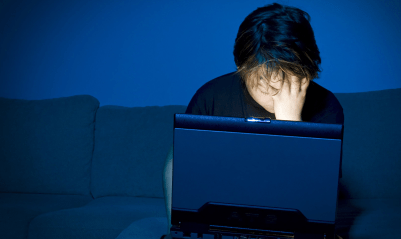
Nowadays, the Media have a significant power over the actions / attitudes of the human being due to their rapid growth. At certain times in life, they have an excessive power over the behavior of some people, leading them to a drastic change. Many times, radically changing their lives, for the worse. The main victims are children / adolescents between the ages of 11 and 18. In recent years, there has been an increase in children hospitalized for self-harm due to stress, poorly resolved feelings, tensions and suffering in their lives. It is thought that the major cause of these children’s behavioral changes is the Media (social media).
boy-using-computer-010

From my point of view, Media can influence our minds, but they are not the true cause of drastic changes in behavior, such as self-harm. The real reason for this problem is the poorly resolved past of these people: traumatic situations or bad experiences. Bullying, lack of attention from parents, love disappointments, etc., are great causes of this suffering. Media only reinforce, in the opposite way, the previously unsolved situation. For example, a plus-size adolescent humiliated in the past due to their weight when seeing “hundreds” of images of models with “perfect” bodies, the ideal of our society nowadays, will follow the idea of wanting to be exactly like the model, wanting to lose weight. However, they may not succeed and they will eventually commit self-harm due to the frustration of not being able to do so.

In conclusion, since most social media users are children / adolescents, they are more likely to be influenced by their short life experience, rapidly changing their behavior, attitudes, ideologies in response to what they see and read, and that can lead to extreme and incorrect behavior. However, social media are not the main cause of these types of situations.

Source

“Screen time reality check — for kids and parents”

by Sílvia Leal

In this article the author picks a specific date to show us what she is talking about – “The day after Christmas” – because nowadays kids are so entertained with their new “toys”, that don’t have much of a (real) toy.

Nowadays what kids receive in Christmas is not just toys. They receive the new smartphones they saw on television and that they wanted, tablets to “play” with or smart TVs to watch whatever they want. And the real thing is that parents don’t seem to be worried about it since they are as digitally distracted as their children – as the author of the text mentioned. With this, many problems emerge. It is said that kids who watch more television than expected are more likely to have language delays. And we know that this can be a major problem in the future, don’t we? Currently the only thing people can think about is if future generations will be capable of leading the world as it has been until today because everything is changing so fast. We are aware that what we see in Media can move crowds and it affects how people think.

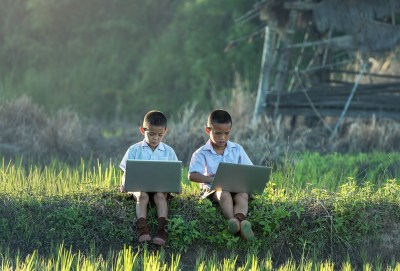
Zwei Jungen mit Laptop / Notebook

Also, in this text the author passes on an advice from AAP, which consists in how to introduce screen time to little children and even talks about how limited that time should be. The participation from parents during that time is quite important but as the kids get older it can be very difficult and we know that is completely true. Presently we see kids getting addicted to all kind of gadgets. They don’t play outside anymore, they play with their tablets or smartphones and, in my opinion, this is a little bit sad since they are not enjoying their childhood and making memories as previous generations did.

To conclude, I think that technologies should be in people’s lives but not that much, especially when it comes to kids. They should have the chance of knowing what it is like to play outside but also – and not excluding it – how to play with their gadgets without becoming addicted to them.

Source

“If kids are addicted to smartphones, tech gizmos, so are parents”

by Sílvia Leal

The theme that the author brings up in this text is how children and parents deal with Media, what they do when they are using the different Media platforms and what are the consequences of using them.

In the beginning, the author says that nowadays parents spend more than nine hours per day using technology and Media. This is quite interesting because now, parents are using Media to satisfy their needs just as much as their kids, while thinking that they are being good role models. If they are doing the same as their kids by spending too much time using social media, watching TV, or whatever, children will think it is normal behaviour and so they will “copy” what their parents do without questioning if that is right or wrong.

kids-playing-with-tablet-happy-parents-in-background

The most remarkable part of this article is when it is said that anyone who attended a specific event could see the bright screens of everyone’s phone and most of the people who were interacting with their phones were the parents and not the kids. So, this takes us to another level, since nowadays we tend to think that only kids are becoming addicted to Media and technologies. By doing this we assume that parents don’t appreciate it as much as their kids, but sometimes they like it even more than their own kids and stop paying attention to what is really important.

The last sentence is proof of what I have just said – “Then please stop playing with your phone and play with me”. A mother was at a playground with her kid and was not giving him any attention so he ended up falling to the ground, because she was too entertained with her phone and didn’t seem to care about what was happening around her.

Source

“Children’s online junk food ads banned by industry”

by Pedro Teixeira

We live in a fast-paced world in which sedentary behavior is increasing by the day. Seems contradictory, doesn’t it? Everything around us is constantly changing, but we are making it change from the comfort our seat, which is located right in front of the computer screen.
It’s no secret that children love the Internet. And what do we find on the Internet? Ads – which may or may not be influencing kids’ lives negatively.

The World Health Organization had previously shown concern regarding children and how overly exposed they are to junk food ads on the Internet and it seems that some measures are now going to be taken. But will it actually make any difference?

Media carefully craft their messages in order to catch the viewers’ attention and manipulate them into buying whatever it is that they are trying to sell, whether that is a product or simply a belief. The authors have a target audience in mind, whose interests revolve around the same thing and so the tactics used in order to control them can be defined from the start.

The children of today have been using the Internet for as long as they can remember. We could say that they are victims of circumstance. There’s so much information that they have absorbed from all the ads they have been forced to watch. Since they are so easily manipulated and get so easily fascinated by what they see online, if they see an ad for McDonalds, it is likely that they will ask their parents later that day to drive them to McDonalds. It’s important to pay attention to what kind of ads kids are seeing. The industry is only worried about profits, but we should be worried about our health and the health of those around us.

main-rudd

Despite the change, fast food will remain hard to escape. Even if kids don’t see ads for junk food online, there’s a chance they’ll see a huge billboard advertising junk food right as they step out of their homes.With the days going by so fast and lives getting more and more hectic, fast food seems like the most cheap and reliable option, in spite of its health drawbacks. A lot of times, parents don’t have the time to think or even care about what their children are eating.

There are concerns relating to the veracity of the campaign and it has been suggested that an independent monitor is hired in order to confirm if the measures are indeed being taken. In the end, it might actually not make much of difference, but it’s still a step in the right direction.

Source

“Kids connecting on social media are less satisfied with real life”

by Pedro Teixeira

Social media can be both a wonderful and a terrible thing. Once you get access to the web, a whole new world of possibilities can and will be created. This could go smoothly or backfire. Either way, it will probably have some sort of impact on the child’s life.

children-1822559_1920
A recent study done in Britain shows that “(…) spending one hour a day chatting on social networks reduced the probability of a kid being completely satisfied with his or her life overall by about 14 percentage points.”. But why does this happen?

The Internet is a hideaway for introvert kids who find it hard to keep up with a world where everything seems to be happening so fast and everyone else appears to have no problem at all socializing. The anonymity that the Internet world provides allows people to be whoever they desire and to hide their insecurities and fears, thus becoming a lot easier to make friends online. It is also a lot easier to find people with similar interests to yours, especially for those who don’t conform to society norms and aren’t interested in appealing to a hegemonic ideology. And there’s so much you can do – so much, that the real world might start to pale in comparison.

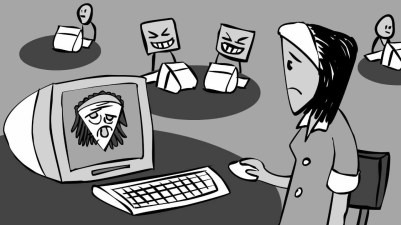
On the other hand, anonymity also has a dark side. It could bring out the worst in some people as it gives them the false impression that they can do whatever they please without having consequences. The Internet could go from the safe-space that they originally intended it to be to an anxiety-filled hell in an instant. Cyber-bullying is real and it’s hard to escape it. They say that “Sticks and stones may break my bones, but words could never harm me”, but is that really true? Words are powerful weapons and they might hurt youngsters, who are still growing, still trying to build self-confidence and still trying to figure out the world around them. In this situation, how are they supposed to react? There is no doubt that their everyday lives will be affected and they might stop themselves from doing other activities that they love and that would bring them joy.

maxresdefault
Happiness is key. Children should be enjoying life to the fullest without having to worry too much about other things while they are still able to and it’s important to pay attention to how they are feeling. As with everything that we encounter on our journey, there is always a good and a bad side. But the bad side shouldn’t stop us from enjoying the good one. Kids may take advantage of all the positive things the Internet has to offer and parents can choose to accompany them and tell them to turn it off at the slightest sign of aggression. They can always go back the next day.

Source